Learning Quechua, part 1
I’ve recently started learning and practicing several foreign languages. This has been mostly inspired by my talented mother, who made sure that at least two languages were spoken at home while I was growing up. In fact, last time I visited home, she helped me brush up on my Greek. Thanks to the help of several good friends, I’ve had the opportunity to practice foreign languages in conversation (written and spoken) daily.
During my last visit to Bolivia, I finally got to see my father in his comfort zone, speaking his native language with mamay & papay (his parents). Seeing this was great, as I’ve only been used to listening to my father speak in his second and third languages, but rarely ever in his native tongue.
So, as I move on in my cultural journey (I wrote a bit about this in one of my previous posts) I decided to look into my father, grandfather and ancestors' native language: Quechua. Now, before starting, I did do some “research” (web surfing) so that I could have some basic pronouns and conjugations in my mind before starting.
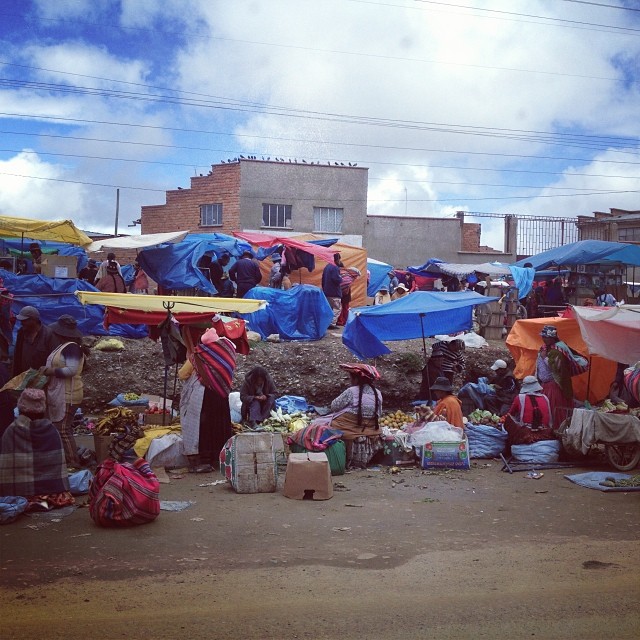
Before I begin, here’s some background on what I’ll be learning. Quechua is considered to be a language family.[1] Given that definition, it’s expected that the language will have many variations or dialects. So, what I will be learning is the Quechuan dialect spoken by my father and family. It is a dialect very similar to Cuzco-Bolivian Quechua, with some minor variations.
So, as I begin my journey into the Quechuan language, I decided to write about my progress. Hopefully my posts will help those also aspiring to speak the language. Note that I might go at a much slower pace than the average language learner, since I’m also practicing other languages (as well as writing a thesis and working full time). But hopefully this will be a good and educational group of posts.
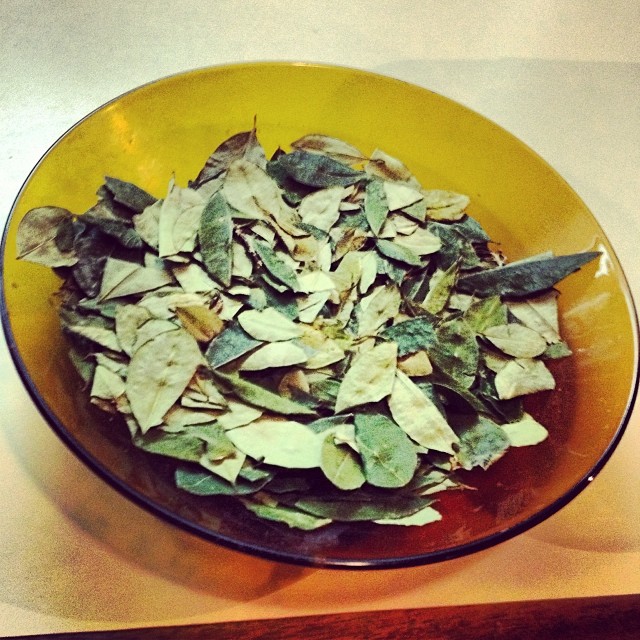
Some coca leaves would be nice, to start off...
[*] The photos in this post were taken by me
[1] Willem F.H. Adelaar “The Languages of the Andes” Cambridge University Press: Cambridge, UK, 2004